



If your desire has been missing in action, arousal feels like it takes forever, or sex has started hurting, and you also happen to have PCOS, those things are probably connected.
Polycystic ovary syndrome affects far more than your menstrual cycle. PCOS and sex are linked through hormones, metabolism, mood, and tissue health, and yet sexual function is still one of the least talked about aspects of living with PCOS. Let's talk about why this happens.
How PCOS Affects Libido and Desire
PCOS libido changes are common, and they are not a personal failing. Your hormones are doing something different.
Androgens Do Not Always Boost Desire
Women with PCOS often produce higher levels of androgens, including testosterone. While testosterone plays a role in sex drive, the relationship is not straightforward. In women, elevated androgens can disrupt the balance between estrogen and progesterone, which can actually dampen desire rather than increase it. A low sex drive with PCOS is one of the most frequently reported symptoms.
Irregular Cycles Remove the Natural Desire Window
Ovulation triggers a natural rise in libido. When PCOS causes irregular or absent ovulation, that cyclical boost disappears. Many women with PCOS notice that their desire feels flat throughout the month rather than following the usual peaks and dips.
Insulin Resistance Plays a Quiet Role
Insulin resistance, present in the majority of women with PCOS, is linked to fatigue, brain fog, and mood disruption. All of these erode the energy and mental bandwidth that desire depends on.
PCOS Arousal, Dryness, and Pain
The impact of PCOS on sex goes beyond wanting. Getting there and staying comfortable presents its own challenges.
Why PCOS Arousal Takes Longer
Hormonal imbalances can reduce blood flow to the genitals and alter nerve sensitivity, making PCOS arousal slower and sometimes less intense. Chronic stress, which frequently accompanies PCOS, compounds the problem. Research shows chronic stress directly impairs genital arousal and lubrication in women [1].
PCOS Dryness and Tissue Sensitivity
Hormonal fluctuations and certain PCOS medications (including some oral contraceptives) can reduce natural lubrication. PCOS dryness makes penetration uncomfortable and can lead to painful sex with PCOS, especially when compounded by pelvic floor tension.
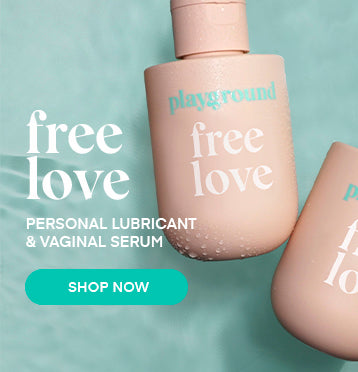
A fragrance-free, glycerin-free lubricant can help significantly. Playground's Free Love is formulated with hyaluronic acid, an ingredient clinically shown to support vaginal hydration [2], and is free of irritants that can worsen sensitivity.
Pelvic Floor Tension and Pain
Women with PCOS have higher rates of pelvic floor dysfunction, which can cause the muscles around the vaginal opening to tighten involuntarily during sex. Painful sex with PCOS is not always about dryness alone. Muscle guarding from anticipating pain, stress, or anxiety plays a real role.
The Emotional Layer
PCOS intimacy challenges often have roots in what is happening emotionally, not just hormonally.
Body Image and Self-Consciousness
Symptoms like weight changes, acne, and excess hair growth can make women feel disconnected from their bodies during intimate moments. When you do not feel at home in your skin, being vulnerable with a partner becomes harder.
Anxiety, Depression, and Low Libido PCOS
PCOS is closely linked with anxiety and depression, both of which are strongly associated with reduced desire. Medications used to treat these conditions (SSRIs in particular) can further lower libido, creating a frustrating cycle.
Supporting Better Sexual Wellness with PCOS
PCOS sex drive issues respond best when addressed from multiple angles.
Support Arousal Naturally
Playground's Mood Maker is a pleasure-enhancing intimacy oil formulated with ashwagandha, an adaptogenic herb clinically shown to improve arousal, lubrication, and overall sexual satisfaction in women [3]. When your body needs a little extra help getting into the moment, a clean, plant-based formula can bridge the gap.
Keep Tissue Hydrated Daily
If dryness is a consistent issue, addressing it between intimate moments matters. Playground's Miracle Melts are hormone-free vaginal inserts with hyaluronic acid that support daily tissue hydration and resilience.
Communicate with Your Partner
PCOS intimacy improves when both partners understand what is happening. Sharing your diagnosis, explaining how it affects desire and comfort, and being honest about what you need in the moment can reduce pressure and build real closeness.
Work with Specialists
A pelvic floor physical therapist can address muscle tension. A sex therapist can help with desire and arousal patterns. An endocrinologist or PCOS-informed provider can review your medications for sexual side effects. You can also connect with a Playground healthcare partner for guidance.
Your Body Is Not the Problem
PCOS changes how desire, arousal, and comfort show up, but it does not take away your right to a satisfying sex life. With the right support and the right tools, pleasurable PCOS intimacy is absolutely possible. Playground's Mood Maker offers plant-based support for arousal and lubrication, helping make intimacy feel more natural and comfortable.
Small, consistent changes can go a long way toward improving intimacy.
Medical Disclaimer: The information provided in this article is for educational purposes only and is not intended to diagnose, treat, cure, or prevent any medical condition. Playground is not a medical provider, and this content should not be considered a substitute for professional medical advice. Always consult your physician or a qualified healthcare provider with any questions or concerns regarding your health, symptoms, or treatment options.
Frequently Asked Questions
1. Does PCOS cause a low sex drive?
Yes. Hormonal imbalances, insulin resistance, irregular ovulation, fatigue, and mood disruption can all reduce desire. Low libido PCOS is one of the most common, but least discussed, symptoms.
2. Can PCOS make it harder to become aroused?
Yes. Hormonal shifts and chronic stress can reduce genital blood flow and nerve sensitivity, making arousal slower and sometimes less intense.
3. Does PCOS cause vaginal dryness?
Hormonal fluctuations and certain PCOS medications, including some birth control pills, can reduce natural lubrication. Using a clean, pH-balanced lubricant helps.
4. Why is sex painful when I have PCOS?
Pain during sex with PCOS can result from dryness, pelvic floor tension, ovarian cysts, or reduced arousal. Addressing the specific cause with your provider is key.
5. Can high testosterone increase libido with PCOS?
Sometimes, but not always. While higher testosterone may increase sexual desire in some people, many with PCOS experience low libido due to the combined effects of hormonal, metabolic, and emotional factors.
6. Can birth control for PCOS reduce sexual desire?
Some oral contraceptives lower free testosterone, which can reduce desire. If birth control is affecting your libido, talk to your provider about alternative options.
7. Does insulin resistance affect sexual health?
Yes. Insulin resistance can impair blood flow, contribute to inflammation, and worsen hormonal imbalances, all of which may affect sexual function.
8. Can PCOS affect orgasms or genital sensitivity?
Yes. Reduced arousal, vaginal dryness, and hormonal changes may make orgasms harder to achieve or decrease genital sensitivity for some people.
9. How can PCOS affect intimacy in a relationship?
Body image concerns, low desire, and physical discomfort can create distance. Open communication with your partner about PCOS and its effects on intimacy can help rebuild connection.
References
[1] Hamilton, L.D. & Meston, C.M. (2013). Chronic stress and sexual function in women. J Sex Med, 10(10), 2443-2454. https://doi.org/10.1111/jsm.12249
[2] Chen, J., Geng, L., Song, X., Li, H., Giordan, N. & Liao, Q. (2013). Evaluation of the efficacy and safety of hyaluronic acid vaginal gel to ease vaginal dryness: a multicenter, randomized, controlled, open-label, parallel-group, clinical trial. J Sex Med, 10(6), 1575-1584. https://doi.org/10.1111/jsm.12125
[3] Dongre, S., Langade, D. & Bhattacharyya, S. (2015). Efficacy and Safety of Ashwagandha (Withania somnifera) Root Extract in Improving Sexual Function in Women: A Pilot Study. Biomed Res Int, 2015, 284154. https://doi.org/10.1155/2015/284154


