



Lube burns or stings when its ingredients are incompatible with your body chemistry, when it disrupts vaginal pH, or when an underlying condition like a yeast infection or bacterial vaginosis is present. Personal lubricant is not supposed to cause a burning sensation; if it does, the lube itself is almost always the source of the problem, not your body.
The most common causes of lube burning during or after sex are: irritating ingredients (glycerin, parabens, synthetic fragrances, propylene glycol, or chlorhexidine); a pH or osmolality mismatch between the lube and your vaginal or anal tissue; an undiagnosed infection that makes mucous membranes hypersensitive; pre-lubricated condoms containing spermicide (particularly nonoxynol-9); and warming or flavored lubes that contain additives specifically designed to create a heating sensation.
Why Your Lube Burns During Intimacy
That burning sensation isn't something you need to tolerate. When lube burns inside, it's usually your body telling you something's off with the formula you're using.
The culprit often comes down to pH balance. Your vagina naturally maintains an acidic environment between 3.8 and 4.5 pH, which keeps your natural flora healthy and protects against infections[1]. Many commercial lubricants sit at a neutral or slightly alkaline pH, which disrupts this delicate balance. When your vaginal environment shifts, irritation follows.
Osmolality also plays a role. This measures how concentrated dissolved particles are in a product. Lubes that burn often have high osmolality, which means they draw water away from your vaginal tissues instead of adding moisture. The result? Increased friction, irritation, and that uncomfortable burning feeling.
Individual sensitivity matters too. Your body chemistry is unique. What works for your friend might irritate your skin because of how your tissues react to specific ingredients. Some people are more sensitive to preservatives, others to emulsifying agents. Recognizing your specific triggers helps you avoid discomfort.
Burning often stems from poor formulations, unlike water-based lubricant benefits featuring hyaluronic acid and clean ingredients for friction-free comfort. Beyond avoiding burning sensations, understanding the safety of daily water-based lube use helps you establish a routine that supports long-term vaginal health.
Common Ingredients That Cause Lube Burning Sensations
Not all lubricant ingredients are created equal. Several commonly used additives trigger burning, stinging, or lube irritation.
Glycerin is a humectant found in many water-based lubes. While it's generally recognized as safe, glycerin can cause issues for some women. It draws moisture from deeper skin layers, and in high concentrations, it can feed yeast growth if you're prone to infections. This is why lube that doesn't burn typically uses glycerin sparingly or not at all.
Propylene glycol works similarly to glycerin and is another common irritant. It's used as a thickener and preservative, but it has a reputation for causing sensitivity in people with reactive skin.
Parabens and other preservatives keep products shelf-stable, but they can trigger contact dermatitis or allergic reactions. If you notice burning that starts hours after use, preservatives might be your culprit.
Fragrances and flavoring agents add sensory appeal but compromise vaginal health. Your vagina doesn't need to smell like berries or vanilla, and these additives increase irritation risk significantly.
Numbing agents like benzocaine or lidocaine seem helpful but mask pain rather than addressing the root cause. They can delay recognizing tissue damage and disrupt normal sensation during intimacy.
Warming or cooling additives create a tingling sensation that some enjoy, but others experience as burning. Individual tolerance varies widely.
| Ingredient | Why It Can Cause Burning |
|---|---|
| Glycerin | Can feed yeast and irritate sensitive tissue at higher concentrations |
| Synthetic fragrance | A leading cause of contact irritation |
| Parabens | Preservatives that can trigger sensitivity in some users |
| High osmolality formulas | Pull moisture from vaginal tissue, causing micro-tears and stinging |
| Propylene glycol | Common irritant in mass-market lubricants |
Free Love is formulated without glycerin, synthetic fragrance, or parabens, and is pH-balanced to reduce the irritation risk covered above.
How to Tell if You're Having an Allergic Reaction to Lube
Understanding the difference between mild irritation and an allergic reaction helps you respond appropriately.
Immediate reactions happen within minutes of application. You might feel burning, stinging, or itching right away. Some women experience localized redness or slight swelling. These reactions typically resolve within an hour of rinsing with water.
Delayed reactions develop over several hours or even the next day. You might wake up with vaginal itching, increased discharge, or mild inflammation. These suggest your immune system is responding to an ingredient, even if you didn't notice problems during sex.
Allergic reaction symptoms to watch for include intense burning that doesn't subside with water rinsing, significant swelling, hives on the surrounding skin, difficulty urinating, or unusual discharge. If you experience any of these, discontinue use immediately and rinse thoroughly with cool water.
When symptoms persist beyond a few hours or worsen, contact your gynecologist. Continuing to use an irritating product increases your risk of infection and can damage your vaginal barrier over time.
Burning lubes amplify what causes vaginal dryness and how to find relief. Understand both for frictionless sex.
What Makes Some Lubes Burn More Than Others
Formulation quality determines how your body responds. Not all water-based lubes perform the same way, which is why water-based lube burns for some women but not others.
High glycerin concentrations (above 10%) are more likely to cause burning than formulas with minimal glycerin or none at all. Cheaper brands often rely heavily on glycerin because it's inexpensive and creates that slippery feel consumers expect.
Poor pH balance is common in mass-market products. Quality lubricants test their pH and adjust to match vaginal acidity. Budget brands skip this step, prioritizing cost over compatibility with your body.
Manufacturing standards matter. Pharmaceutical-grade lubes undergo more rigorous testing for contamination and ingredient stability. Products made in facilities without strict quality control are more likely to cause irritation.
Individual body chemistry means your sensitivity threshold differs from others. Some women tolerate glycerin well. Others experience burning immediately. Factors like hormonal fluctuations, menstrual cycle timing, and overall vaginal health influence your reactions.
7 Signs You Need to Switch to a Gentler Lube Formula
Your body sends clear signals when a lubricant isn't working. If your lube stings or causes any of the following, listen to these red flags.
-
Persistent burning or stinging during or after use suggests an incompatible formula. This isn't something that improves with repeated use.
-
Recurring yeast infections or bacterial vaginosis after using a particular lube indicates an ingredient is disrupting your natural flora. Stop use and see if infections decrease.
-
Dryness after sex despite using a lubricant means the formula is actually pulling moisture from your tissues rather than adding it. This worsens discomfort over time.
-
Visible skin irritation or rashes on your vulva or inner thighs show your skin is reacting chemically. Switch products immediately.
-
Disrupted vaginal pH manifests as unusual discharge, odor changes, or itching between sexual encounters. This signals your microbiome is struggling with the lube you're using.
-
Hormonal sensitivity changes during perimenopause or menopause can make previously tolerable lubes suddenly irritating. Your vaginal tissues change, and the product needs to shift accordingly.
-
Partner experiencing issues like irritation or burning during partnered sex suggests the formula contains an allergen affecting both of you, or osmolality is high enough to cause friction and chafing.
Burn-free bliss starts here: Essential Pleasure Bundle, a glycerin-free lube + sensual oil combo.
How to Choose Lube That Won't Burn or Irritate
Finding a non-irritating lubricant starts with understanding what to look for on ingredient lists.
pH-balanced formulations between 4.0 and 4.5 match your vaginal environment. Check product labels for pH specifications. Quality brands list this information because it matters for safety.
Minimal ingredient lists work better than complex formulas. Fewer ingredients mean fewer potential irritants. Look for water as the base, natural moisturizers like hyaluronic acid, and gentle preservatives. A clean water-based lubricant with hyaluronic acid, like Love Sesh, is a strong example. Avoid anything you can't pronounce or don't recognize.
Hormone-free options protect your endocrine system. Some lubes contain synthetic hormones or hormone-mimicking compounds. Choose formulas explicitly labeled hormone-free to avoid systemic effects.
Glycerin-free or low-glycerin formulas prevent yeast issues and burning sensations. If you're prone to infections or have sensitive skin, skip glycerin entirely. Free Love is one of the best glycerin-free water-based lube options and a sensitive lube formulated to support pH balance without ingredients known to trigger burning.
Protect yourself with proven strategies on how to avoid UTI after sex.
Natural ingredient bases like plant-derived oils and botanical extracts offer better tolerability. Water-based lubes with natural emulsifiers tend to cause fewer reactions than synthetic versions.
Before you raid the kitchen cabinet to look for natural ingredients like coconut oil, read about using coconut oil as lube and its potential risks.
Patch testing before full use prevents unpleasant surprises. Apply a small amount to your inner wrist or behind your ear and wait 24 hours. If no reaction occurs, you're likely safe to use it.
Gentle transition strategies help if you're switching from an irritating lube. Wait 48 hours after stopping the old formula to let any irritation subside completely. Then introduce the new lubricant slowly, using minimal amounts initially.
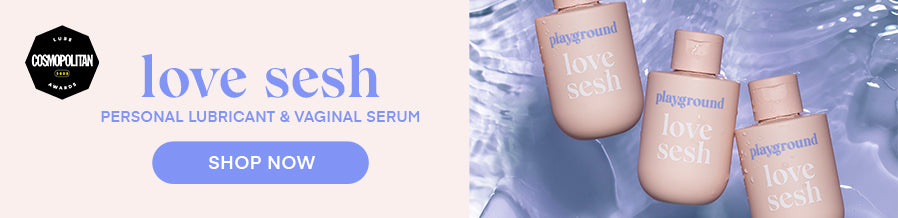
For women experiencing lube burning, our Love Sesh water-based lubricant offers a pH-balanced formula with hyaluronic acid and ashwagandha root extract, completely free of glycerin, propylene glycol, parabens, and petrochemicals. The minimal ingredient list reduces irritation risk significantly.
If you prefer a non-liquid option, Miracle Melts vaginal inserts provide deep hydration without the concerns of traditional lubes. These inserts melt at body temperature, creating natural-feeling moisture. They're made with glycerides and hyaluronic acid sodium salt, free of all common irritants.
For those seeking additional support during intimacy, Mood Maker pleasure-enhancing oil combines plant-based ingredients, including ashwagandha and damiana extract. This formula prioritizes sensation and arousal without irritating compounds.
Comfortable sex lets you experience how orgasms benefit women's health with pelvic strengthening, pain relief, and oxytocin skin glow.
Playground's sexual wellness products are especially curated for comfort.
Beyond avoiding irritation, choosing the right lubricant may also play a role in your urinary health. Friction during sex is one of the leading triggers of urinary tract infections in women, and a well-formulated, pH-balanced lubricant can help reduce that friction significantly. Here's what the research says about whether lube can help prevent UTIs after sex and what to look for in a formula.
When Lube Burning Indicates a Deeper Health Issue
Sometimes burning points to underlying conditions needing professional attention.
Vaginal atrophy, common during menopause or after certain medical treatments, causes thinning vaginal tissue that burns more easily. Standard lubes provide temporary relief but don't address tissue quality. In these cases, hormonal or non-hormonal therapies may be necessary[2].
Hormonal changes during perimenopause shift your vaginal pH and tissue thickness. What worked before suddenly causes irritation. Your healthcare provider can evaluate whether systemic changes require different treatment approaches.
Sensitivity to estrogen or other hormonal fluctuations means your tissues become reactive at certain cycle points. Tracking when burning occurs helps identify hormonal patterns.
Persistent infections despite using gentle lubes suggest an underlying condition like bacterial vaginosis or Candida overgrowth needing medical treatment. Switching lubes helps but doesn't resolve the infection.
Contact your gynecologist if burning persists despite switching to gentle formulas, if you develop signs of infection, or if symptoms coincide with other health changes. Professional evaluation ensures you're not overlooking a treatable condition.
Medical Disclaimer: The information provided in this article is for educational purposes only and is not intended to diagnose, treat, cure, or prevent any medical condition. Playground is not a medical provider, and this content should not be considered a substitute for professional medical advice. Always consult your physician or a qualified healthcare provider with any questions or concerns regarding your health, symptoms, or treatment options.
FAQs
Q: Is it normal for lube to burn the first time you use it?
A: No. Quality lubricants shouldn't cause burning. Initial discomfort signals ingredient sensitivity or pH imbalance. This is your body's way of telling you the formula isn't compatible with your chemistry.
Q: How do you treat irritation caused by lube?
A: Stop using the lube immediately and rinse the area gently with water. Avoid further friction and allow the tissue to heal. If symptoms persist beyond 48 hours or include discharge or swelling, consult a healthcare provider to rule out infection.
Q: Should lube burn or sting when you use it?
A: No. Lube should not burn or sting. A burning sensation almost always means the formula contains an ingredient your body reacts to, such as glycerin, parabens, or synthetic fragrance, or that a pH or osmolality mismatch is irritating your tissue.
Q: Can lube burning cause long-term damage?
A: Continued use of irritating products disrupts your vaginal pH and increases infection risk[3]. Over time, this damages your protective vaginal barrier. Switching to gentle formulas prevents these complications.
Q: Why does water-based lube burn, but silicone doesn't?
A: Water-based formulas often contain glycerin or preservatives, triggering sensitivity. Silicone-based lubes have simpler ingredient profiles, reducing irritant exposure. However, individual reactions vary. Some women tolerate water-based lubes well while experiencing issues with silicone.
Q: How long should I wait before trying a new lube after burning?
Allow 24 to 48 hours for irritation to subside completely. Consider patch testing on your inner wrist before vaginal application. This prevents repeated irritation while you identify compatible products.
Q: Can hormone changes make me more sensitive to lube ingredients?
A: Yes. Hormonal fluctuations during menstruation, pregnancy, or menopause increase sensitivity to specific ingredients. Your tissue thickness, pH balance, and immune response all shift with hormones, affecting product tolerance[2].
Q: What's the safest lube ingredient list to look for?
A: Seek pH-balanced formulas with minimal ingredients. Water, natural moisturizers like hyaluronic acid, and gentle preservatives are ideal. Avoid glycerin, propylene glycol, parabens, fragrances, and numbing agents. Look for products explicitly labeled hormone-free and free of petrochemicals.
Q: What should I do if the lube burns during sex?
A: Stop immediately, rinse the area with warm water, and avoid using that product again. Apply a cold compress if irritation persists. Switch to a glycerin-free, paraben-free lube formulated for sensitive skin.
Q: Does KY Jelly burn?
A: KY Jelly contains glycerin and chlorhexidine gluconate, which can cause burning in people with sensitive skin or vaginal pH imbalances. Many users report stinging sensations. Consider switching to a glycerin-free alternative.
Q: Why does lube burn me but not my partner?
A: Vaginal tissue is more sensitive than penile skin and has a delicate pH balance (3.8-4.5). Ingredients that don't irritate external skin can disrupt vaginal pH and cause burning. Individual sensitivity to ingredients also varies.
Q: Can lube cause a pH imbalance?
A: Yes. The vagina's healthy pH is 3.8 to 4.5, and most lubes sit above pH 5, which disrupts the microbiome and can trigger burning or bacterial vaginosis. Always use a lube labeled pH-balanced for vaginal use to prevent this.
Q: Why does water-based lube burn?
A: Water-based lube burns when the formula has high osmolality, contains irritants like glycerin or propylene glycol, or sits at a pH that clashes with your vaginal acidity. Not all water-based lubes cause this problem. A well-formulated sensitive lube with low osmolality, no glycerin, and a pH between 4.0 and 4.5 should feel smooth and comfortable. If every water-based lube you've tried causes lube irritation, an underlying condition like BV or vaginal atrophy may be amplifying your sensitivity, and a visit to your healthcare provider can help rule that out.
References
[1] Gandhi, J., Chen, A., Dagur, G., Smith, N., Cali, B., & Khan, S. A. (2016). Genitourinary syndrome of menopause: an overview of clinical manifestations, pathophysiology, etiology, evaluation, and management. American Journal of Obstetrics and Gynecology, 215(6), 704-711. https://doi.org/10.1016/j.ajog.2016.07.045
[2] Waetjen, L. E., Crawford, S. L., Chang, P. Y., Reed, B. D., Hess, R., Avis, N. E., ... & Gold, E. B. (2018). Factors associated with developing vaginal dryness symptoms in women transitioning through menopause: a longitudinal study. Menopause, 25(10), 1094-1104. https://doi.org/10.1097/GME.0000000000001130
[3] Chen, J., Geng, L., Song, X., Li, H., Giordan, N., & Liao, Q. (2013). Evaluation of the efficacy and safety of hyaluronic acid vaginal gel to ease vaginal dryness: a multicenter, randomized, controlled, open-label, parallel-group clinical trial. Journal of Sexual Medicine, 10(6), 1575-1584. https://doi.org/10.1111/jsm.12125


